
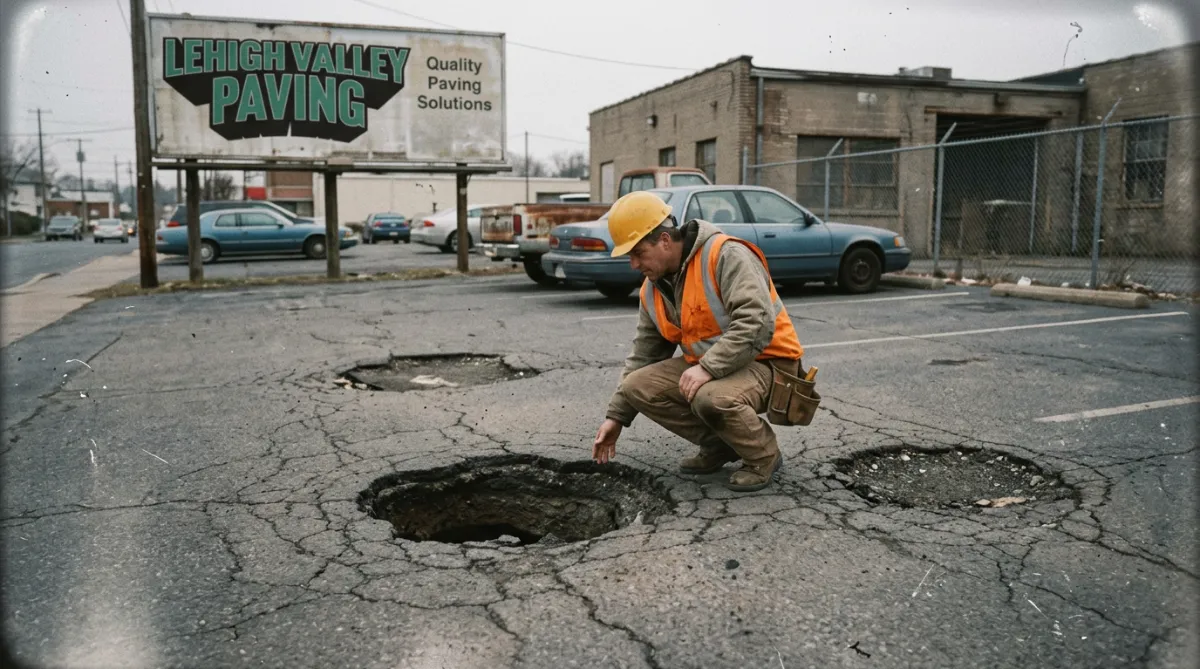
For a Lehigh Valley business, a parking lot does more than provide a place for customers and employees to park. It creates a first impression, affects day-to-day safety, and protects the long-term value of your commercial property. When cracks, potholes, and worn areas begin to show up, it can be tempting to call for another patch and move on.
Patching has an important place in asphalt maintenance. A well-executed patch can correct a small, isolated problem before it grows. But there comes a point when repeated repairs cost more, look worse, and provide less dependable results than resurfacing. Recognizing that point helps business owners make a smarter investment in their property.
Here are seven signs your commercial parking lot may be ready for resurfacing.
Widespread Cracking Has Taken Over
A few small cracks do not necessarily mean a parking lot needs a full resurfacing project. However, cracks spread quickly when water enters the pavement and reaches the underlying base. Pennsylvania’s changing temperatures, rain, snow, and freeze-thaw conditions can make that process even faster.
When cracking covers large portions of the parking lot, isolated patching may only address the visible symptoms. New asphalt patches can sit beside aging, weakened pavement, leaving the overall surface uneven and vulnerable to further damage. Resurfacing places a new asphalt layer across the existing lot after necessary repairs and preparation, creating a smoother and more consistent surface.
Alligator cracking is one of the most important warning signs. This pattern of interconnected cracks resembles reptile skin and often indicates that the asphalt and its support structure have weakened under traffic. If alligator cracking appears in several areas, a more comprehensive solution is usually needed.
Potholes Keep Returning
Potholes are more than a nuisance. They can damage vehicles, create tripping hazards, collect water, and make a property appear poorly maintained. A patch can repair an individual pothole, temporarily, especially when the surrounding pavement remains sound. But recurring potholes often point to moisture problems, failed asphalt, or deterioration below the surface.
If your parking lot develops potholes in new places every season, or if repairs break apart shortly after installation, continued spot patching may not be the best long-term approach. Resurfacing can restore the pavement surface across larger sections and address damaged areas before the new asphalt is installed.
For businesses in the Lehigh Valley, this matters after winter. Water enters existing cracks, freezes, expands, and weakens the pavement. When temperatures rise again, the damaged asphalt can break away. A parking lot that repeatedly needs pothole repairs may be telling you it needs more than a short-term fix.
Patches Cover Too Much of the Surface
A professionally repaired patch can blend into a parking lot reasonably well, but a surface filled with patches eventually becomes difficult to maintain. The lot may look like a quilt of different asphalt colors, textures, and elevations. This can affect curb appeal, but it can also create uneven driving and walking conditions.
When patches become common across the parking lot, each new repair adds another transition point where water can enter and deterioration can begin. The maintenance cycle becomes increasingly expensive and disruptive. Your business may need to schedule repeated work, manage blocked-off spaces, and explain rough pavement to customers.
Resurfacing offers a cleaner reset. It gives the parking lot a uniform appearance while extending its useful life. Rather than continuing to repair one failed section at a time, you can restore a broader surface and plan maintenance more strategically.
Water Pools After Rainfall
Standing water is one of asphalt’s biggest enemies. A properly installed parking lot should guide water away from driving lanes, parking spaces, entrances, and the pavement base. When water sits on the surface for long periods, it can work its way into cracks and cause deterioration from within.
Pooling water may indicate that the parking lot has lost its original slope, settled in certain areas, or developed surface depressions from vehicle traffic. Patching may fill a low area temporarily, but it may not correct drainage across the lot. Without addressing the underlying slope and surface condition, the same issue can return.
Resurfacing can help restore proper grading when planned and installed correctly. Before work begins, an experienced paving contractor can evaluate where water flows, where it collects, and what repairs are necessary. Better drainage helps protect your investment and reduces the risk of potholes, cracking, and premature asphalt failure.
The Surface Looks Faded and Worn
Fresh asphalt has a dark, clean appearance. Over time, sunlight, traffic, vehicle fluids, weather, and oxidation cause the surface to fade from black to gray. Fading alone does not always mean resurfacing is immediately necessary. Sealcoating may protect pavement that remains structurally sound.
But fading combined with rough texture, loose aggregate, shallow cracks, and surface wear can signal that the asphalt binder is breaking down. As the surface loses flexibility, it becomes more susceptible to water intrusion and cracking. At that point, simply applying sealer may hide the problem without solving it.
A resurfaced parking lot provides a new wearing surface that looks professional and handles daily traffic more reliably. For customer-facing businesses, that improvement can make a noticeable difference in how the property is perceived.
Parking Lines and Traffic Areas No Longer Function Well
Faded striping is often a straightforward maintenance issue, but it can also reveal a larger pavement problem. If the parking lot surface is cracked, uneven, heavily patched, or deteriorating, new lines alone will not create a safe, organized layout.
A worn parking lot can make it harder for visitors to see parking spaces, accessible spaces, fire lanes, loading zones, directional arrows, and pedestrian walkways. This creates confusion and can raise safety concerns for customers, staff, and delivery drivers.
Resurfacing gives your business an opportunity to refresh the entire parking lot layout. Once the new asphalt surface is in place, clear professional striping can improve traffic flow, maximize usable spaces, and help maintain a more welcoming property.
Repair Costs Keep Adding Up
The clearest sign may be financial. If you are calling for pothole repairs, crack filling, patching, and emergency maintenance year after year, calculate what those repairs have cost over time. A lower-cost patch can make sense when the damage is limited, but ongoing repairs across a failing surface can become a poor value.
Resurfacing typically costs less than a full parking lot replacement because the existing base and lower pavement layers may remain in place if they are stable. The process generally involves repairing damaged areas, preparing the existing surface, and applying a new layer of asphalt. It can give a commercial parking lot many additional years of service when completed at the right time.
For Lehigh Valley businesses, proactive resurfacing can reduce disruption, improve safety, and help avoid the larger expense of complete reconstruction later. A professional paving assessment can identify whether your parking lot is a good candidate for resurfacing or whether deeper repairs are required.
A smooth, durable parking lot reflects the care you put into your business. If patches are becoming frequent, cracks are spreading, or water is collecting across the pavement, Lehigh Valley Paving can help evaluate your property and recommend a practical solution. Contact our team for a free estimate on commercial parking lot resurfacing in the Lehigh Valley.