
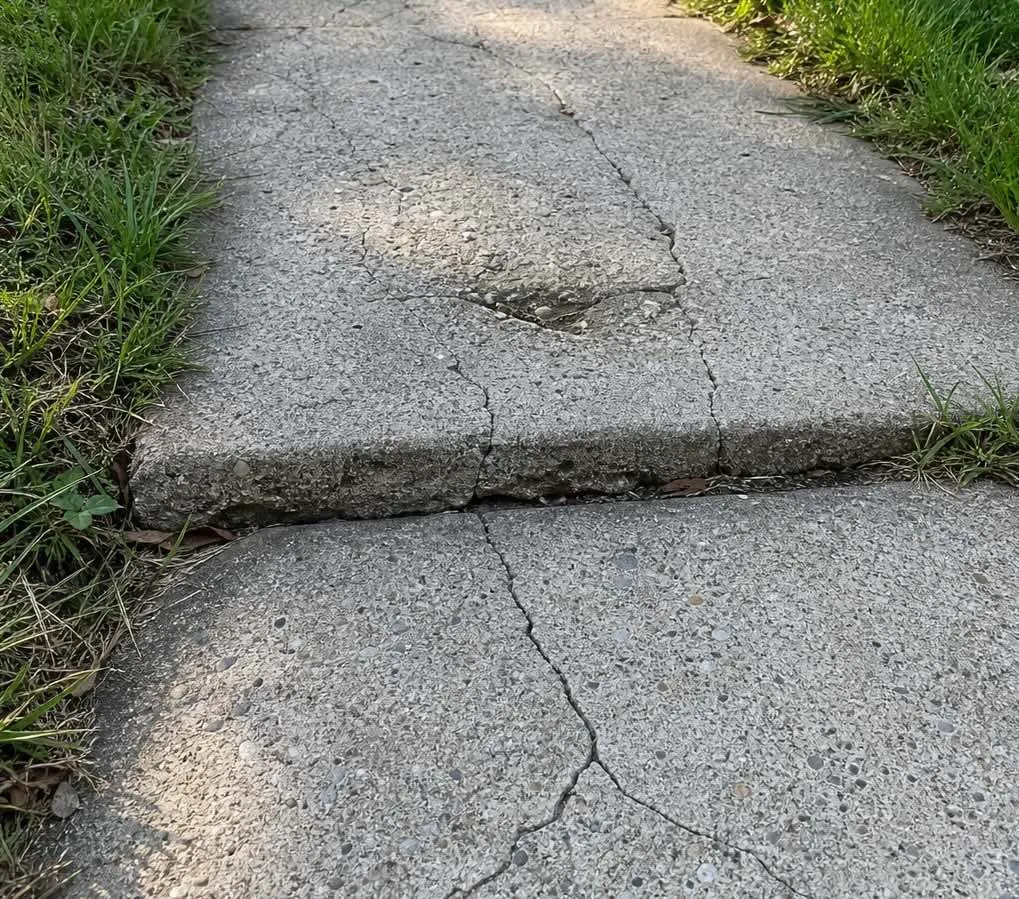
Concrete sidewalk repair is about more than improving appearance and doesn’t happen over night. It starts with a hairline crack near the driveway, a corner that chips away after winter, or a slab that sits just high enough to catch the toe of a shoe. In the Lehigh Valley, those small changes can move quickly. A season of snow, melting ice, rain, and repeated freeze-thaw cycles can turn a minor flaw into an uneven, broken walkway that needs real attention.
A sound walkway gives people a safer path to a front door, parking area, storefront, office entrance, rental unit, or outdoor gathering space. It also helps property owners address drainage problems, reduce trip hazards, protect curb appeal, and avoid allowing surface damage to spread beneath the slab.
For homes and businesses throughout the Lehigh Valley, the best repair starts with understanding why the sidewalk changed in the first place. Cracks, settlement, lifting, and crumbling concrete each point to a different issue below or around the surface. A durable solution needs to account for that cause—not simply cover the damage and hope it holds.
Why Sidewalks Deteriorate in the Lehigh Valley
Concrete looks solid and permanent, but it moves with the ground beneath it. It also reacts to water, temperature changes, roots, traffic, and time. The Lehigh Valley’s weather makes those forces especially important. Cold winters, heavy rain, snowmelt, and seasonal ground movement all take a toll on sidewalks around Allentown, Bethlehem, Easton, and surrounding communities.
A sidewalk can remain in place for many years when it has a stable base, proper drainage, and adequate joint spacing. When one of those factors fails, the concrete often shows the problem at the surface.
Freeze-thaw cycles put pressure on concrete
Water expands when it freezes. That simple fact causes many sidewalk problems across eastern Pennsylvania.
Rainwater and snowmelt can enter existing cracks, gaps at joints, porous spots, and areas where the concrete has begun to wear down. Once temperatures drop, that trapped moisture freezes and expands. The expansion pushes against the concrete from inside the crack or against the slab from below. When temperatures rise, the ice melts, creating room for more water to enter.
After enough cycles, small cracks widen, edges begin to spall, and sections of the sidewalk can shift. The damage may look cosmetic at first, but the repeated movement can weaken the slab and create uneven walking surfaces.
Water intrusion weakens the base
Concrete depends on the compacted material below it. If water reaches the base and stays there, the soil may soften, wash away, or settle unevenly. The slab above loses support and can sink, tilt, or crack under ordinary foot traffic.
This is why a sidewalk that develops a low spot often needs more than surface patching. The visible depression may reflect a drainage problem, downspout discharge issue, poor grading condition, or void beneath the concrete. A lasting concrete sidewalk repair should address the water source as well as the damaged section.
Lehigh Valley Paving evaluates drainage and surrounding grade as part of the repair process because a new or repaired slab cannot perform well if water continues to collect beside or beneath it.
Soil settlement creates uneven slabs
Not all soil settles evenly. Backfilled soil around a house, utility trench, driveway edge, retaining wall, or addition may compress over time. If the concrete spans that area, one part of the slab can drop while the rest stays in place.
Settlement often creates a noticeable lip between sidewalk panels. Even a modest vertical difference can become a trip hazard, especially near an entryway or along a route that sees frequent use. Settlement can also pull joints apart, leaving gaps where water enters and accelerates the problem.
Tree roots can lift concrete
Trees bring shade, character, and value to a property, but their roots can create major issues that require concrete sidewalk repair. As roots grow close to the surface, they may push upward on concrete slabs. The result is usually a raised section, a cracked panel, or an abrupt change in elevation between two slabs.
Root-related damage requires careful judgment. Cutting roots without understanding the tree’s condition can affect its stability and health. Leaving the roots untouched, however, may allow the sidewalk to keep lifting. The right approach depends on the location of the root, the severity of the displacement, the condition of the concrete, and the surrounding landscape.
In some cases, leveling or replacing a limited section provides a practical answer. In others, the repair may require changes to the walkway’s alignment, base preparation, or nearby landscaping.
Age and wear gradually break down the surface
Even well-installed concrete does not last forever. Over time, the surface may become more porous, cracks may open at joints, and edges may wear down from foot traffic, shoveling, salt exposure, lawn equipment, and moisture.
Older sidewalks often show several problems at once: surface scaling, scattered cracks, weak corners, settlement, and poor drainage. When damage appears across multiple slabs, it is worth looking beyond one isolated repair. Replacing only the worst panel may solve an immediate hazard, but a broader repair plan can make more sense if neighboring sections are close to failing.
Signs Your Sidewalk Needs Attention
Sidewalk damage often becomes familiar because people walk past it every day. A homeowner learns to step over the raised corner. A business owner notices that customers avoid a cracked area near the entrance. A tenant mentions a puddle, but no one sees it as urgent until the puddle freezes.
The safest approach is to inspect a sidewalk before the problem becomes routine.
Raised slab edges and trip hazards
A raised edge between two concrete slabs is one of the clearest reasons to schedule sidewalk repair. These height differences can develop from root pressure, frost heave, settlement on the adjacent slab, or movement in the base material.
The risk increases in high-traffic areas such as:
- Front walkways and stoops
- Driveway-to-door connections
- Storefront entrances
- Apartment and rental property paths
- Medical or professional office walkways
- Sidewalks near parking lots
- Routes used by older adults, children, delivery workers, or visitors with mobility devices
A repair professional should determine whether the elevated slab can be leveled, whether the lower section needs support, or whether replacement offers the better long-term result.
Widening or deep cracks
Concrete naturally develops some cracks over time, but not every crack carries the same meaning. A fine, stable crack may remain mostly cosmetic. A crack that widens, separates, crumbles at the edges, or runs through the full depth of the slab can signal movement beneath the surface.
Pay close attention when cracks:
- Form uneven edges from one side to the other
- Allow water to enter below the slab
- Spread outward from a corner or joint
- Break the concrete into multiple loose pieces
- Appear alongside sinking or lifting
- Reopen soon after a previous patch
When the slab remains structurally stable, crack repair and sealing may help limit water intrusion. When the crack results from base failure or major movement, the better solution may involve removing and replacing the affected section.
Pooled water after rain or snowmelt
Water should not sit on a sidewalk for long after rainfall. Standing water creates a slippery surface, adds stress during freezing weather, and often points to drainage or settlement trouble.
A low area may develop because the slab has sunk. It may also result from surrounding grade directing runoff toward the walkway. Downspouts that empty next to a sidewalk can be especially damaging when they repeatedly saturate the same section of soil.
If a sidewalk holds water, the repair plan should identify where the water comes from and where it should go instead. Correcting grade, redirecting downspouts, rebuilding the base, or replacing the slab with proper slope may all play a role.
Crumbling edges and surface scaling
Concrete can begin to flake, chip, or peel away at the surface. This condition, often called scaling or spalling, frequently appears after repeated freezing and thawing, exposure to deicing products, poor finishing, or water entering weak areas of the concrete.
Minor surface wear may be manageable with appropriate repair materials. Extensive crumbling, exposed aggregate, broken corners, or widespread deterioration usually calls for a more thorough solution. Surface coatings cannot restore the structural strength of concrete that has broken down through much of its depth.
Sinking, rocking, or loose panels
A sidewalk panel should feel solid underfoot. If a slab rocks, shifts, or visibly moves when someone steps on it, the base beneath it may have eroded or settled. This issue can worsen quickly because each step puts additional force on unsupported concrete.
A loose slab should not simply receive a cosmetic patch around the perimeter. The repair needs to restore stable support beneath the panel or replace the section after rebuilding the subbase.
Repair or Replacement: How to Make the Right Call
One of the most common questions property owners ask is whether they need repair or full replacement. The answer depends on the condition of the concrete, the cause of the damage, and whether the sidewalk still has enough structural integrity to serve as a reliable walking surface.
Concrete sidewalk repair works best when the slab remains mostly sound and the issue is limited. Replacement becomes the stronger option when the concrete has lost its stability, broken into multiple pieces, or suffered damage that will keep returning.
When sidewalk repair makes sense
Concrete sidewalk repair may be appropriate when the problem is isolated and the surrounding material remains stable. Examples include a narrow crack, a small chipped edge, a manageable height difference, or a local surface defect that has not affected the slab’s overall performance.
A professional evaluation may recommend repair when:
- The slab has limited cracking but remains level and firm
- A trip hazard can be corrected without removing the entire panel
- The concrete has a minor low area caused by a localized issue
- Joints need cleaning and sealing to limit water entry
- A small section has surface damage but the slab remains structurally sound
- The surrounding base and drainage conditions remain acceptable
The key word is stable. A repair can extend the useful life of stable concrete. It cannot reliably solve ongoing settlement, root pressure, drainage failure, or extensive internal cracking without addressing those underlying conditions.
When replacement is the better investment
Replacement generally makes more sense when the slab has become severely broken, sunken, lifted, or weakened. A panel that has fractured into several pieces will not regain its strength from patching alone. The same holds true when repeated water problems have undermined the base.
Consider replacing the sidewalk section when:
- The slab has major settlement or an obvious tilt
- Multiple cracks divide the panel into separate pieces
- Edges have deteriorated deeply
- The concrete rocks because of voids underneath
- Root pressure has lifted the slab substantially
- Previous concrete sidewalk repair attempts have failed
- The sidewalk has recurring drainage issues
- Accessibility requirements call for a more controlled slope or transition
- Several adjoining slabs show widespread deterioration
Replacement allows the contractor to remove the failed concrete, inspect the subgrade, rebuild the base where needed, improve drainage conditions, and install a new section with proper slope and joint placement.
Lehigh Valley Paving’s approach focuses on whether a section can truly be saved, rather than treating replacement as the default answer. That distinction matters because unnecessary removal adds cost, while under-repairing a failed slab can leave the same hazard in place.
Why patching is not always enough
Patching has a role, but it has limits. A patch can fill a small surface defect or help seal a minor crack. It cannot repair a slab that continues to move.
For example, a homeowner may fill a crack near a downspout. If the downspout keeps directing runoff into the same area, water may continue to soften the soil below. The concrete may then settle farther, reopen the crack, or develop a new one nearby.
Likewise, filling the gap around a raised slab does not remove the trip hazard. The height difference remains. A durable concrete sidewalk repair must restore a smoother, safer walking transition.
Common Concrete Sidewalk Repair Methods
No single method works for every damaged sidewalk. The best approach comes from matching the repair method to the actual failure. A contractor should inspect the slab, base, drainage, elevation changes, crack pattern, nearby trees, and use of the walkway before recommending work.
Crack repair and joint sealing
Crack repair helps prevent water from entering openings in otherwise stable concrete. The process may involve cleaning the crack, removing loose material, and applying a suitable sealant or repair compound.
Joint sealing serves a similar purpose. Concrete sidewalks include joints that allow the slabs to move slightly with temperature changes. When those joints break down or fill with debris, water can reach the base below. Cleaning and sealing the joints can help protect the subgrade and slow further deterioration.
This work is most effective when the sidewalk has not already shifted significantly. If one slab has sunk or lifted, sealing the crack alone will not correct the uneven surface.
Surface patching and edge repair
Small holes, chipped corners, and shallow spalls can sometimes be repaired with a compatible cementitious material. Proper preparation matters. The damaged area must be cleaned, loose concrete removed, and the repair material applied according to the conditions of the existing slab.
Patching works best on limited damage. It should not be treated as a cure for broad surface failure. When an entire walkway has scaling across multiple sections, replacement may produce a more dependable and uniform result.
Grinding for minor height differences
Concrete grinding can reduce a small raised edge between slabs. This method removes a portion of the high concrete surface to create a smoother transition.
Grinding may help when the elevation difference is modest and the slab remains in good condition. It is less suitable when the concrete has major cracking, deep settlement, or continued lifting from roots. Removing too much concrete from a weak slab can leave it thinner and more vulnerable to future damage.
A site-specific assessment helps determine whether grinding solves the problem or only postpones a larger concrete sidewalk repair job.
Slab leveling and support restoration
When a sidewalk panel has settled but remains intact, leveling methods may restore the slab’s position or fill voids beneath it. The exact technique depends on the slab’s condition, access, soil behavior, and extent of the settlement.
Leveling can be a useful option when the concrete itself still has strength and the movement is limited. Before proceeding, the contractor should identify why the slab settled. If water continues to wash out material beneath the walkway, leveling without drainage correction may not last.
Sectional concrete replacement
Replacing one or more damaged panels is often the most dependable solution for broken, settled, lifted, or extensively deteriorated concrete. The process typically includes removing failed material, preparing or rebuilding the base, setting forms, placing fresh concrete, finishing the surface, and cutting or forming joints that allow for controlled movement.
The new section must match the function of the walkway. That means considering width, slope, thickness, drainage, transitions to existing pavement, and pedestrian traffic. A front entry path, a commercial sidewalk, and a connection between a parking lot and a building may each need different attention to detail.
The Importance of a Strong Base
The concrete slab gets most of the attention because it is visible. The base underneath often determines whether the sidewalk stays level over time.
A durable sidewalk needs properly prepared ground beneath it. If the soil contains weak, loose, wet, or poorly compacted material, the concrete can settle even when the slab itself was installed correctly.
What happens below the slab
The subgrade is the native soil beneath the sidewalk. Depending on site conditions, the contractor may add compacted aggregate or another suitable base material above the subgrade to improve support and drainage.
The goal is to create a firm, even foundation that supports the concrete across its full area. If some parts of the slab rest on solid soil while other parts bridge a soft or empty space, cracking becomes more likely.
During sidewalk replacement, removing the damaged panel provides an opportunity to inspect what caused the failure. Soft soil, washed-out material, poor drainage, roots, and old construction debris may all become visible once the concrete is gone.
Compaction matters
A new base needs proper compaction. Loose fill can compress after the concrete is installed, creating settlement beneath the slab. Thorough preparation helps reduce that risk.
This matters around homes where soil was disturbed during construction, utility work, landscaping, driveway installation, or drainage projects. It also matters near commercial buildings, where heavier pedestrian traffic, maintenance equipment, and frequent access can expose weak spots quickly.
Drainage protects the new work
Water management should be part of any meaningful concrete sidewalk repair plan. The surface should carry water away instead of trapping it. The ground beside the sidewalk should not direct runoff underneath the slab. Downspouts should not continually dump water at a joint or edge.
A small correction in slope can prevent a large amount of future damage. When Lehigh Valley Paving reviews a repair site, drainage and surrounding grade deserve the same attention as the crack or trip hazard that first drew notice.
Sidewalk Safety and Accessibility
A sidewalk serves people with different mobility needs, footwear, vision, strength, and balance. That makes consistent elevation, drainage, and surface condition important for every property—not only commercial sites.
A person carrying groceries, pushing a stroller, using a cane, moving a delivery cart, or navigating a wheelchair experiences an uneven sidewalk differently than someone walking casually across it. A surface that seems manageable to one person may create a serious barrier for another.
Commercial properties need careful review
Businesses, offices, medical facilities, apartment buildings, retail centers, and other public-facing properties should routinely inspect their walkways. Uneven concrete near entrances, parking areas, accessible spaces, ramps, and loading zones can create safety concerns and interfere with access.
Accessibility standards can apply to many commercial locations, especially where sidewalks connect parking, building entrances, curb ramps, and public-use areas. Proper slopes, cross slopes, transitions, clear width, and stable surfaces all matter.
The exact requirements depend on the property and scope of work. A knowledgeable contractor can identify conditions that need closer review and help ensure the repair plan does not create a new accessibility issue while correcting an old one.
Residential walkways deserve the same attention
A cracked front walk may not appear urgent until someone trips on it during an evening visit or slips where water freezes after a storm. Residential concrete sidewalk repair protects the daily route between the driveway, street, porch, garage, mailbox, and entry door.
It also helps prevent small defects from growing. Addressing a minor joint gap or early settlement before another winter can often reduce the likelihood of more extensive replacement later.
Winter makes sidewalk defects more dangerous
Winter adds several layers of risk. Snow can hide cracks and raised edges. Meltwater can freeze in low spots. Ice-melting products can contribute to surface wear, particularly if the concrete already has weak or scaling areas.
Before the colder months arrive, inspect areas where water pools, joints have opened, slabs have moved, or edges have started to crumble. A well-timed repair can improve safety when the walkway sees its most difficult weather conditions.
How to Care for a Concrete Sidewalk
Routine care will not stop every problem, but it can slow deterioration and help property owners spot damage early.
Keep water moving away from the walkway
After rain, take a look at where water travels. If a downspout empties directly onto the sidewalk or at the edge of a slab, consider redirecting it. If mulch, soil, or landscaping has built up against the concrete, it may trap moisture along the edge.
Watch for changes after landscaping work, driveway work, gutter repairs, or grading changes. These projects can alter how water moves across the property.
Clean joints and cracks
Leaves, soil, grass, and debris can collect in sidewalk joints. Over time, that material holds moisture and can encourage water to work beneath the slabs. Keeping joints clear makes it easier to see their condition and helps prevent water from lingering.
If cracks are narrow and stable, timely sealing may help limit infiltration. If they widen or begin to show vertical displacement, arrange for an assessment rather than repeatedly refilling them.
Use deicing products carefully
Some deicing chemicals can contribute to concrete surface damage, especially on older or already weakened slabs. Follow product directions, avoid overapplication, and use physical snow removal whenever possible.
Metal shovels can also chip weak edges and surface areas. Use care around joints, corners, and sections showing signs of scaling.
Avoid loading edges unnecessarily
Sidewalk edges are more vulnerable than the center of a well-supported slab. Heavy equipment, vehicles, dumpsters, or repeated impacts near the edge can crack concrete or cause it to break away.
If lawn equipment or delivery activity regularly crosses a walkway, consider whether the path needs added support, a different route, or a stronger connection between surfaces.
What to Expect During Sidewalk Replacement
For property owners, knowing what happens during replacement makes the project less disruptive. Each site differs, but a well-planned process follows a clear sequence.
Evaluation and repair planning
The first step involves reviewing the sidewalk’s condition and the cause of failure. The contractor looks for cracking, displacement, drainage paths, root interference, base problems, accessibility concerns, and the relationship between the sidewalk and nearby pavement or structures.
This stage determines whether the work should involve localized repair, leveling, or replacement of one or more concrete panels.
Removal of failed concrete
When replacement is necessary, the damaged slab is removed carefully. The crew breaks up and removes the failed concrete, then examines the material beneath it.
This stage often reveals why the sidewalk failed. The base may be soft, washed out, uneven, or disrupted by roots. Addressing those conditions before installing new concrete gives the new section a better chance of lasting.
Base preparation and grading
The crew prepares the subgrade and adds or compacts base material as needed. They also establish the proper slope so water drains away from the building and avoids creating a low spot at the walkway.
The surface does not need a dramatic slope to drain effectively. It needs a consistent, intentional grade that moves water without making the path uncomfortable or difficult to use.
Concrete placement and finishing
Fresh concrete is placed, shaped, and finished to create a stable walking surface. The finish should provide traction without being excessively rough. Joints are added in planned locations to help manage normal concrete movement and reduce random cracking.
A professional installation also pays attention to transitions. The new section should meet adjacent slabs, driveways, curbs, steps, and entrances in a way that avoids abrupt edges and drainage traps.
Curing and return to use
Concrete needs time to cure and gain strength. The exact time before foot traffic or heavier use depends on the project conditions, weather, concrete mix, and contractor guidance.
Avoid rushing this stage. Fresh concrete can be marked, damaged, or weakened if people, equipment, or vehicles use it too soon.
Choosing the Right Scope for Your Property
A sidewalk problem may involve one cracked slab, but it may also be part of a larger pattern. Looking at the entire walking route helps property owners choose the right scope.
For instance, a business may have one obvious trip hazard near the entrance, several uneven panels along the parking lot, and water collecting near an accessible route. Fixing only the first slab could leave the rest of the route unsafe or inconsistent.
A homeowner may see a crack near the front steps, but the real issue could be a downspout that has directed water toward the walkway for years. Repairing the crack without correcting the runoff may lead to another failure.
The most useful concrete sidewalk repair plan identifies:
- What failed
- Why it failed
- Whether the surrounding slabs remain stable
- How water affects the area
- Whether roots or soil movement play a role
- How people use the walkway
- Whether accessibility or liability concerns need attention
- Which method will provide the strongest long-term outcome
With more than three decades of paving experience in the region, Lehigh Valley Paving brings local familiarity to these decisions. Pennsylvania winters, soil conditions, drainage patterns, and public-facing property needs all affect how a sidewalk repair should be approached.
What Our Customers Ask about Concrete Sidewalk Repair
What causes concrete sidewalks to crack in the Lehigh Valley?
Freeze-thaw cycles, water intrusion, soil settlement, tree roots, age, and repeated use commonly cause sidewalk cracks. Water can enter small openings, freeze, expand, and worsen the damage over time.
Can an uneven concrete sidewalk be repaired without replacement?
Sometimes. If the slab remains structurally sound and the height difference is limited, leveling or grinding may correct the trip hazard. Severely broken, sunken, or lifted slabs usually need replacement.
When should a cracked sidewalk be replaced?
Replace a sidewalk when cracks divide the slab into multiple pieces, the concrete rocks or sinks, edges crumble deeply, water has damaged the base, or previous repairs have repeatedly failed.
Why does water collect on my sidewalk after rain?
Standing water usually indicates settlement, poor slope, blocked drainage, or runoff from nearby downspouts and landscaping. Correcting the water source is important because pooled water can worsen cracking and create ice hazards in winter.
How can I prevent future sidewalk damage?
Keep water away from the slab, clean debris from joints, seal stable cracks when appropriate, avoid damaging edges with heavy equipment, and address settlement or root-related movement before it becomes severe.