
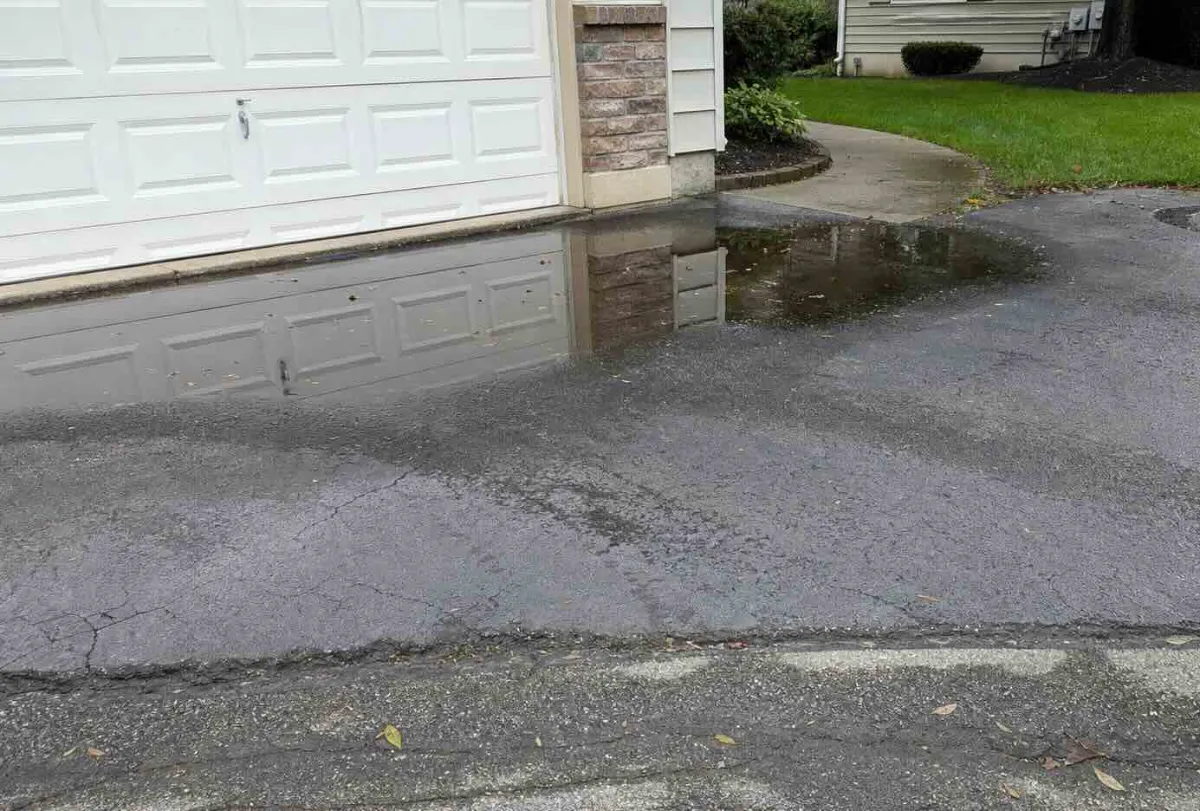
Driveway drainage problems tend to show up fast around the Lehigh Valley. Heavy rain, snowmelt, and freeze-thaw cycles can turn a small low spot into a much bigger issue before long. Water that sits near a garage, softens the base under asphalt, or cuts through gravel usually means the driveway is not moving water the way it should.
A driveway ought to shed water cleanly. When it does not, the cause is usually pretty simple: bad slope, worn-out surface, clogged runoff paths, or a base that is no longer doing its job. The damage starts small, then turns into standing water, icy patches, cracks, settling, edge breakup, and runoff headed where it should not go.
Why water collects
The most common driveway drainage problems start with grading. If the driveway slopes toward the house, the garage, or a low area with nowhere for water to go, it will pool there every time it rains or thaws. Even a driveway that looks level can hide a subtle dip that catches runoff once the surface ages and settles.
The surface itself can make things worse. Asphalt that has started to rut, crack, or oxidize can hold water in shallow depressions. Gravel driveways can develop channels that send water into one path instead of spreading it out. Edges that have failed can let runoff escape the wrong way, which often leads to erosion and more settling along the sides.
Winter adds another layer. Meltwater can refreeze in the same low spot night after night, turning a nuisance into a slippery, damaged section of driveway. That constant cycle of water, ice, and thawing soil is one reason drainage issues often become structural issues if nobody deals with them early.
Signs to watch for
Standing water is the easiest sign to spot. If puddles hang around long after the rain ends, the driveway is telling you water has nowhere to go. Dark patches, staining, or the same wet spot showing up storm after storm usually point to the same problem.
Cracks near the trouble area are another clue. When water slips into small openings and freezes, it pushes the surface apart. On gravel driveways, you may see loose stone, soft edges, or washout along the sides after a heavy rain.
Garage thresholds and basement walls matter too. If water is moving toward a building instead of away from it, the driveway may be funneling runoff the wrong direction. At that point, the issue is no longer just a driveway problem.
What causes the problem
There is usually more than one cause behind driveway drainage problems. Poor slope, compacted soil, worn base material, and runoff from nearby roofs or slopes often work together. Downspouts that dump too close to the drive can add more water than people expect.
Soil type matters as well. Dense soil slows infiltration, so water has to go somewhere else. If the driveway was not built with that in mind, the water often ends up in the lowest available spot. Over time, repeated saturation weakens the support under the driveway and makes settlement more likely.
Sometimes the problem starts outside the driveway. A changed swale, a neighboring slope, or landscaping that redirects stormwater can all push water toward the drive. That is why the best fix usually looks at the whole site, not just the wet spot people notice first.
Regrading the surface
Regrading is one of the best ways to fix driveway drainage problems because it changes how water moves before it collects. If the slope is wrong, water will keep following the same bad path no matter how many patches get added later. A proper grade gives runoff a clear way away from the garage, the house, and the pavement.
In real terms, regrading may mean removing failed material, rebuilding the base, and reshaping the driveway so water sheds to the side or into a controlled drain path. Sometimes the fix is minor. Sometimes it takes deeper work, especially when water has been pooling in the same area for years.
This is where judgment matters. Too much slope can make the driveway awkward or unsafe. Too little slope leaves water sitting there. The right fix is the one that moves runoff without creating a new issue somewhere else.
Drainage systems that help
Sometimes grading alone does not solve the issue. If a driveway sits at the bottom of a slope, spans a wide area, or meets a garage with little room to adjust, a drainage system can help control water more directly. Trench drains, catch basins, channel drains, and French drains all have different jobs depending on where the water collects.
A trench drain works well when water needs to be intercepted before it reaches a garage or another low point. A catch basin can collect runoff at a dip and send it into a pipe or another outlet. French drains help with subsurface water along the edge of a driveway, especially when the problem comes from wet soil beside the pavement.
The right system depends on the property. A small low spot may only need a targeted fix. A larger drainage issue may need a mix of surface shaping and collection points. In Lehigh Valley, where storms can dump a lot of water quickly, that combined approach often works better than relying on one drain alone.
Surface materials matter
Not every driveway handles water the same way. Asphalt can hold up very well when it is built on a solid base and pitched correctly. Once those parts fail, water starts settling on the surface and breaking it down faster.
Gravel behaves differently. It can drain well when it is installed right, but it can rut, shift, and collect sediment if traffic is heavy or the base is weak. Once that happens, water follows the ruts and digs the problem deeper.
Permeable surfaces can help in some cases because they let water pass through instead of sitting on top. But even permeable systems need proper installation, a sound base, and maintenance. They are not a cure-all if the larger drainage pattern on the property is still sending too much water to the same place.
Home and business impacts
For homeowners, driveway drainage problems usually start as an annoyance. You step around puddles, salt the same icy patch over and over, and watch cracks grow a little each season. Then the issue starts affecting the structure around the driveway, and the repair gets bigger.
For businesses, the impact is easier to see. Parking areas and access drives have to stay safe and usable. Standing water near entrances, loading areas, or employee parking can create slip hazards and wear the pavement out faster, which leads to more maintenance and more downtime.
Lehigh Valley weather makes both situations more urgent. Rain, snow, and freezing temperatures can all hit the same weak spot within the same week. What looks minor in spring can become a much larger repair by winter.
How a proper fix works
A solid repair starts with finding where the water is coming from. That means looking at where runoff begins, where it slows down, and where it ends up. The lowest puddle is not always the source of the problem, so a good inspection follows the whole path.
From there, the fix may involve regrading, rebuilding the base, cleaning out drainage paths, or adding a drain where water naturally collects. If the driveway surface has already weakened, the damaged area may need repair or replacement before the drainage work will really hold.
Good workmanship matters here. Drainage fixes need to fit the property, not just the material. A well-planned repair gives water a clean way out, helps protect the driveway from further damage, and lowers the chance that the same issue returns after the next hard rain.
Seasonal maintenance
Good drainage is not just about the first repair. It also depends on keeping things clear through the year. Leaves, grit, ice melt, and road debris can clog grates, fill low spots, and block the path water is supposed to take.
Spring is a good time to check for settling, clear debris, and make sure runoff still moves the right way after winter. Fall matters too, especially where trees drop a lot of leaves. A clogged drain or a leaf-filled low spot can trap moisture against the driveway surface.
After heavy storms, a quick walkaround can tell you a lot. Look for new pooling, washouts, exposed edges, or places where water is cutting across the driveway instead of moving away from it. Small fixes early are always easier than waiting until the surface fails.
When the base has failed
Sometimes driveway drainage problems keep coming back because the base underneath is already damaged. If water has been sitting in the same place for years, it may have softened the soil or washed out part of the support layer. Once that happens, a surface patch will not last.
A failed base often shows up as recurring dips, repeated cracking, or sections that feel unstable under vehicle weight. Water and movement feed each other at that point. The more the driveway flexes, the more openings it creates, and the faster the surface breaks down.
Fixing that kind of issue usually means opening the area, correcting the drainage path, rebuilding the support, and restoring the surface so it sheds water properly. It takes more work, but it is often the only real way to stop the cycle.
How Lehigh Valley approaches it
The best driveway drainage fix depends on the property, the surface, and the way water behaves in a real storm. That is why local experience matters in the Lehigh Valley. Soil, winter weather, and site layout all affect what will work and what will not.
Lehigh Valley Paving’s background in asphalt paving, driveway repair, and local work across the region fits that kind of job well. The company notes more than 35 years of experience, full licensing and insurance, and familiarity with local climate and code requirements. Those things matter because a drain only helps when it is paired with the right slope, the right outlet, and the right surface repair.
That local perspective is especially useful when driveway drainage problems overlap with seasonal wear. A driveway can shed water just fine in July and still fail in January if the base was not rebuilt correctly or runoff is still entering from the wrong direction. The best results usually come from treating the driveway as part of the whole property, not as a strip of pavement by itself.
Preventing repeat issues
Prevention starts with keeping water away from the driveway in the first place. Clean gutters, extended downspouts, and sensible grading around the edges all cut down the amount of water the driveway has to handle. If roof runoff or nearby ground is feeding the problem, that should be fixed before the next storm makes it worse.
It also helps to watch for early signs of settlement. A small dip can turn into a standing-water trap before anyone notices a crack. Catching it early gives you more options and usually keeps the repair smaller.
Routine attention matters for both homes and commercial properties. The goal is not to keep rebuilding the driveway. It is to keep the drainage pattern stable enough that the surface can do its job year after year without water wearing it down from underneath.
What Our Customers Often Ask About Driveway Drainage Problems
What causes driveway drainage problems?
Driveway drainage problems usually come from poor slope, settled soil, worn pavement, clogged runoff paths, or water from nearby roofs and slopes. In many cases, more than one of those issues is happening at the same time.
How do you know if a driveway needs regrading?
If water pools in the same spot after rain, flows toward the garage, or leaves repeated low spots and soft areas, the grade may be wrong. Regrading becomes more likely when the problem keeps coming back after simple patch repairs.
Can a drain fix standing water by itself?
A drain can help a lot, but it usually works best when the driveway also has the right slope and a stable base. If water is being pushed into the area by bad grading or runoff from somewhere else, the drainage fix needs to address that too.
Why do driveway drainage issues get worse in winter?
Water freezes in low spots, expands inside cracks, and weakens the surface and base. Every freeze-thaw cycle can make a small drainage problem bigger, especially on driveways that already hold water.
What is the best first step for a driveway drainage problem?
The best first step is to trace where the water comes from and where it stops. Once you understand the whole path of runoff, you can decide between regrading, a drain, base repair, or a combination of fixes.
Why Local Expertise Matters
Driveway drainage problems are rarely just about a puddle. They usually point to a grading issue, a base problem, or a runoff path that no longer fits the property. When the fix matches the site, the driveway lasts longer, stays safer, and handles Lehigh Valley weather with less trouble.
A good repair in this region usually comes down to local knowledge, the right materials, and a clear understanding of how water behaves across the whole property. That is the kind of work Lehigh Valley Paving is positioned to handle, especially when a driveway needs a drainage solution that can hold up through rain, snow, and freeze-thaw cycles.