
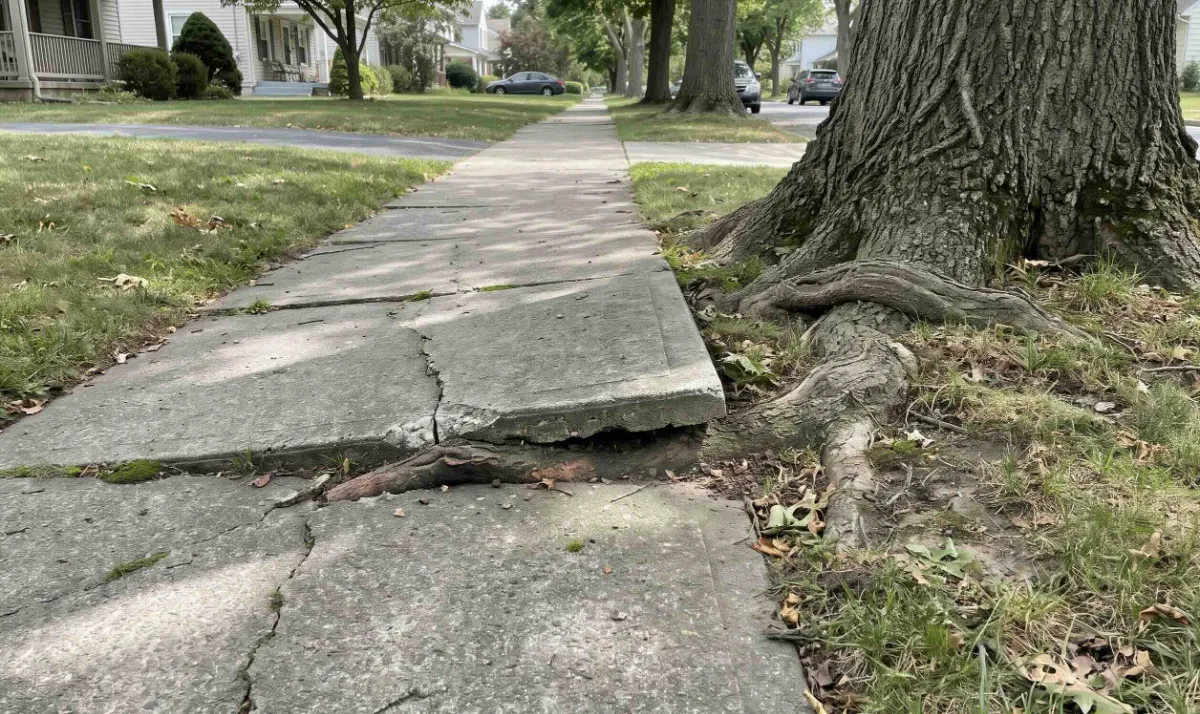
Tree root sidewalk damage often begins with something easy to overlook: a raised corner, a narrow crack, or a concrete panel that no longer lines up with its neighbor. You step around it for a while. Then a visitor catches a shoe on the edge, your snow shovel stops short, or water starts collecting where the walkway used to drain.
Now the problem needs more than a passing glance.
You want a safe sidewalk, but you may also want to keep the tree that shades your front yard. Those goals do not automatically conflict. The right repair depends on what the roots have displaced, how much sound concrete remains, and whether the walking route can accommodate a lasting correction.
Lehigh Valley Paving approaches sidewalk repairs by looking beyond the broken surface. We examine the slab, surrounding grade, drainage, and likely cause of movement before recommending what to save and what to replace. That matters when a growing tree and a fixed concrete walkway occupy the same ground.
Why Tree Roots Push Sidewalks Out of Place
A sidewalk needs consistent support beneath each panel. When roots grow beneath or beside that support, they can change how the slab sits. One edge rises, another loses contact with the base, and concrete that once carried weight evenly begins to bend or crack.
Tree root sidewalk damage does not always produce a dramatic upheaval. Sometimes the first clue is a slight ridge at a joint. Elsewhere, a panel tilts toward the lawn or develops cracks near the tree.
The tree may be the most obvious suspect, but the surrounding conditions still deserve attention. Water, soil settlement, aging concrete, and winter weather can contribute to the same failure.
Roots and water can create overlapping problems
A raised slab may redirect runoff toward an adjacent joint. Water enters that opening, reaches the base, and weakens support beneath the next panel. During freezing weather, trapped moisture can add further stress.
That is why sidewalk damage from tree roots sometimes extends beyond the concrete directly beside the trunk. The initial movement changes drainage, and the drainage problem affects neighboring sections.
Our inspection considers that chain of events. Replacing the visibly lifted panel while leaving a saturated, unstable section beside it can leave another repair waiting to happen.
A nearby tree does not explain every uneven slab
Two panels can form a raised edge because one moved upward or because the other settled downward. From above, the results may look similar.
The distinction matters. Removing material from a high edge may address a modest surface difference, while restoring support beneath a settled panel requires a different approach.
Before choosing a repair, we look at the full walking route rather than treating the nearest tree as proof of the cause.
Recognizing When the Damage Needs Professional Attention
You do not need to wait until a sidewalk becomes difficult to cross. Tree root sidewalk damage deserves an assessment when it creates an uneven transition, breaks a panel, or changes where water collects.
Look for changes during ordinary use. Does a stroller jolt at the same joint? Does a delivery cart catch on an edge? Have you started stepping into the grass to avoid a section?
Those small adjustments often reveal how much the walkway has changed.
Signs that the problem goes beyond a surface crack
A fine crack in otherwise stable concrete presents a different situation from a slab that rocks underfoot. More concerning conditions include:
- A noticeable height difference between adjoining panels.
- Cracks that separate the concrete into loose pieces.
- A tilted slab that directs water toward the house or walkway.
- Broken corners and deeply crumbling edges.
- Repeated cracking through an earlier patch.
- Movement when someone steps on the panel.
A patch cannot restore reliable support beneath loose concrete. Nor can it remove a raised edge simply by filling the gap alongside it.
Our sidewalk repair services focus on those distinctions: whether the concrete remains sound, whether the movement is isolated, and whether repair can restore a stable walking surface.
Photograph changes instead of relying on memory
Tree-related sidewalk damage can become familiar enough that you stop noticing it. Photographs help show whether a crack has widened or a panel has shifted since your last inspection.
Take pictures from the same position, including the joints and nearby tree. Record where puddles form after rain. These observations will not replace an inspection, but they can help explain a problem that changes with weather or develops gradually.
What a Professional Sidewalk Inspection Should Cover
A useful inspection should answer more than “How much concrete needs replacing?” It should establish what failed, what remains serviceable, and what conditions could undermine the repair.
For tree root sidewalk damage, that means examining the relationship between the tree, the damaged panels, the ground beneath them, and the route people need to use.
We also review where the sidewalk meets a driveway, steps, curb, or neighboring section. A new panel must fit those fixed elevations without introducing another awkward transition.
The slab, base, and drainage all matter
The concrete may still have enough strength for a limited correction. Alternatively, deep cracks or widespread deterioration may make replacement more practical.
Below the slab, loose material, voids, moisture, and root interference can affect support. Some conditions become clear only after removal, so a responsible proposal should explain how the contractor will handle discoveries beneath the concrete.
Our approach to concrete sidewalk repair in the Lehigh Valley treats base preparation and drainage as part of the repair, not as unrelated extras.
Root decisions need their own review
Concrete work and tree care involve different judgments. A paving contractor can assess the walking surface, but cutting significant roots requires an understanding of the tree’s health and stability.
When tree root sidewalk damage involves substantial roots, a qualified arborist may need to help determine what the tree can tolerate. We can then plan the pavement work around that guidance rather than making root removal an automatic part of demolition.
Grinding: A Possible Fix for a Small Raised Edge
Concrete grinding removes material from a raised edge to create a smoother transition. It can offer a limited repair when the elevation difference is modest and the remaining slab is sound.
For some tree-related sidewalk damage, grinding may reduce an immediate trip hazard without removing the entire panel. The important question is whether the concrete and underlying conditions make that correction worthwhile.
Grinding changes the surface. It does not stop a root from growing or restore support beneath a damaged slab.
When grinding makes sense
A professional assessment should consider the depth of material that would need removal, the condition of the panel, and the resulting walking transition.
A small lip on otherwise stable concrete presents a stronger candidate than a heavily tilted panel with multiple cracks. The finished correction must remain usable and should not create an awkward slope.
We evaluate whether a limited surface correction genuinely solves the problem before recommending broader removal.
When grinding only delays replacement
Repeated grinding can become a poor response to continuing movement. Each pass removes more concrete while leaving the source of the lifting untouched.
If tree root sidewalk damage has badly fractured the slab or produced substantial displacement, replacement may offer a better opportunity to address the underlying conflict.
Homeowners should understand that distinction before paying for a repair that looks better briefly but leaves little room for another correction.
Leveling: Useful for Settlement, Not Every Root Problem
Slab leveling addresses a different condition: concrete that has dropped or lost support. Depending on the site and method, a contractor may be able to restore an intact panel’s position or fill voids beneath it.
That does not mean every uneven sidewalk needs lifting.
With tree root sidewalk damage, the high panel may already sit above the appropriate elevation. Raising adjacent panels to meet it could affect drainage and connections farther along the walkway.
Establish the correct elevation first
The goal is not simply to make two edges meet. The whole route needs to work.
A contractor should consider nearby steps, driveway crossings, entrances, and remaining slabs before deciding which section belongs higher or lower. Otherwise, fixing one joint can shift the problem down the path.
Lehigh Valley Paving evaluates those connections when reviewing surface leveling and repair options. A smooth joint helps only if the resulting walkway also drains and remains comfortable to use.
Sound concrete is essential
Leveling cannot restore a panel that has broken into unstable pieces. It also cannot substitute for addressing water that continues to wash out the base.
Where settlement and root pressure overlap, more than one condition may need correction. A useful recommendation explains which problem the proposed method addresses—and which problems it does not.
Sectional Replacement: Removing What Cannot Be Saved
When tree root sidewalk damage leaves a panel badly cracked, tilted, or lifted beyond practical repair, sectional replacement often provides the clearest path forward.
The crew removes the failed concrete, examines the exposed ground, prepares the base, and installs a new section with planned elevations and joints. That access matters because the surface alone cannot reveal everything happening beneath it.
Replacement does not automatically mean tearing out the entire sidewalk. If adjoining panels remain stable, a focused project may be enough.
Removal exposes the cause
Once the damaged panel comes out, the contractor can inspect root interference, soft ground, washed-out material, or an uneven base.
This is where planning must guide the work. A crew should not simply cut whatever prevents the new forms from fitting. Significant root decisions need appropriate review before the work proceeds.
For tree root sidewalk damage, the value of replacement lies partly in that opportunity to reassess the space beneath the slab. Pouring new concrete over an unresolved conflict can reproduce the old problem.
The replacement must connect properly
A good replacement panel needs firm support, suitable drainage, and smooth connections to the concrete that stays.
We pay attention to the transition at both ends, not just the finish across the middle. A new section should not leave an abrupt edge beside an older slab or trap runoff at the joint.
Joint placement, finishing, and curing also affect the completed work. Fresh concrete needs protection while it gains strength, and homeowners should follow project-specific instructions before reopening the route.
When the Walkway Needs a Different Layout
Sometimes the existing route leaves too little room for both the tree and a durable sidewalk. Repeatedly rebuilding the same panel may not resolve that conflict.
Tree root sidewalk damage can call for a broader discussion about alignment, grade, or the amount of walkway being replaced. Changing the route may make more sense than forcing another slab into the same constrained space.
That possibility depends on the property. There may be little room between the tree, house, curb, and lot boundary.
A modest realignment may create useful separation
Where space allows, shifting a private walkway away from the most difficult root area may reduce direct interference.
The proposed route still needs careful review. It must connect sensibly to the entrance, avoid creating new drainage problems, and leave a usable walking width.
We consider these relationships before recommending concrete removal. An attractive curve means little if it sends water toward the foundation or creates an uncomfortable approach to the steps.
Frontage sidewalks can involve additional requirements
A sidewalk along the street may sit within a public right-of-way, even when it borders your lawn. Before changing its alignment or grade, verify the applicable municipal requirements.
Tree root sidewalk damage does not establish who owns the tree, who controls the sidewalk design, or who must approve the work. Those questions can affect the repair scope and schedule.
Confirm them before demolition, particularly where the proposed solution involves a street tree or a change to the established walking route.
Protecting the Tree Without Accepting an Unsafe Sidewalk
A mature tree can be an important part of a property. Keeping it deserves serious consideration, but preservation should not mean leaving broken concrete in place indefinitely.
The useful question is what arrangement can support both a safer walking route and responsible tree care.
Tree root sidewalk damage requires that balance. Cutting roots indiscriminately may harm the tree, while installing concrete without considering future movement may leave the homeowner facing another upheaval.
Coordinate the decisions before construction
If an arborist needs to review the roots, arrange that input before the concrete crew reaches the point of making irreversible choices.
Useful questions include:
- Which roots are involved in the displacement?
- Does the proposed work threaten important roots?
- Could a change in walkway position reduce interference?
- What excavation limits should the crew observe?
- Does the tree’s condition affect the available options?
No single answer applies to every tree. Size, location, condition, and the extent of disturbance all matter.
Avoid promises that ignore future growth
A contractor should not promise that a repair will permanently prevent all tree root sidewalk damage while the same growing roots remain close to the walkway.
A more credible explanation identifies what the repair will accomplish, what conditions remain, and what the homeowner should monitor afterward.
Our pavement recommendations focus on correcting the actual failure while recognizing the limits of concrete work. That gives you a clearer basis for choosing between a modest repair and a more substantial change.
Why Drainage Belongs in the Repair Plan
Roots may start the movement, but water can help turn a single raised panel into a longer stretch of damaged sidewalk.
A tilted section may hold runoff against a joint. A downspout may repeatedly saturate the same edge. Soil or mulch beside the walkway may keep water from escaping.
Repairing tree root sidewalk damage without reviewing those conditions leaves an important part of the problem unanswered.
Watch the site after rain
Notice where water arrives and where it stops. Does it flow from the driveway, collect beside the trunk, or run off the roof near the damaged section?
Share those observations during the inspection. A dry-day visit may not reveal a short-lived puddle or the volume of water coming from a downspout.
Our repair planning includes surrounding grade because the new surface needs somewhere appropriate to send runoff.
Do not mistake a new surface for a complete correction
Fresh concrete can look excellent while sitting above weak or persistently wet support. Appearance alone does not establish that the repair will hold up.
For lasting results, the contractor must consider both the walking surface and the conditions supporting it. That principle applies whether the project replaces one panel or several.
Comparing Estimates Without Losing the Important Details
The cost of repairing tree root sidewalk damage depends on more than the visible crack. Removal, access, base preparation, drainage work, disposal, and the number of affected panels can all influence the scope.
Tree-related coordination and municipal requirements may also affect the project. That makes a site-specific estimate more useful than a general price quoted without inspecting the walkway.
Compare what each proposal includes, not just the final total.
Ask for a defined scope
An estimate should identify which panels or areas need work and describe the proposed correction. It should also explain whether the contractor anticipates base rebuilding or changes to drainage.
Ask how the crew will handle unexpected roots or unsuitable material discovered after removal. Clear expectations help prevent an apparently small project from becoming a series of rushed decisions.
With Lehigh Valley Paving, homeowners can request a free estimate and draw on more than three decades of regional paving experience. The useful part of that conversation is understanding which work the sidewalk needs and why.
Consider the cost of doing too little
The least expensive option may be appropriate when the concrete remains sound and the defect is limited. It becomes less attractive when the same patch or surface correction keeps failing.
Tree root sidewalk damage calls for judgment, not automatic replacement or automatic repair. Saving serviceable concrete can control the project scope. Removing a failed slab can prevent money from going toward a correction that never had a sound foundation.
What to Expect While the Work Is Underway
Sidewalk work affects daily access, especially when the damaged section leads to your only regularly used entrance. Discuss that before scheduling.
Identify another practical route for household members, visitors, deliveries, and pets. Tell the contractor about mobility needs or other access concerns that could change how the work should proceed.
A short project still needs a clear plan for getting around it safely.
Expect inspection beneath removed panels
When replacement is necessary, the crew removes the failed concrete and checks the exposed area before preparing for the new slab.
If conditions differ from what the surface suggested, the repair plan may need review. Tree root sidewalk damage can hide more extensive interference or reveal that water and settlement played a larger role than expected.
That is a reason to build communication into the project, not a reason to skip the investigation.
Follow the return-to-use instructions
Grinding, limited repairs, and concrete replacement involve different work and different restrictions. Do not assume that a finished-looking surface is ready for normal use.
For replacement concrete, weather, the mix, and project conditions influence curing and reopening instructions. Keep people, equipment, and vehicles off the area until the contractor says the appropriate use can resume.
Keeping the Repaired Walkway Under Observation
After the repair, make the sidewalk part of your normal property checks. You do not need a complicated maintenance routine. Look at joints, drainage, and transitions when you clear leaves, shovel snow, or inspect the yard.
Tree root sidewalk damage can develop gradually, so early changes matter. A new ridge or recurring puddle deserves attention before it becomes another broken panel.
Keep photographs of the completed work. They provide a useful baseline if you notice movement later.
Clear debris from joints, avoid unnecessary loads along unsupported edges, and use care when removing snow around corners. Follow product directions for deicers rather than assuming more material provides better protection.
Most importantly, do not keep refilling a crack that reopens alongside visible movement. That pattern calls for another look at the cause.
The goal is a walking route you can use without planning each step around an obstacle. A carefully chosen repair gets you closer to that goal by addressing the concrete, the supporting ground, and the tree-related conditions together.
FAQs about Tree-Related Sidewalk Damage and Professional Solutions
Can tree root sidewalk damage be repaired without replacing the concrete?
Sometimes. Grinding may correct a small raised edge if the slab remains sound. Leveling may help an intact panel that has settled. Severely cracked, unstable, or substantially lifted concrete usually needs replacement. An inspection should establish the cause and extent of movement first.
Should tree roots be cut before repairing a sidewalk?
Do not assume cutting is necessary or safe. Significant roots may contribute to the tree’s health and stability. Have a qualified arborist evaluate proposed root disturbance when appropriate, and coordinate that guidance with the sidewalk repair plan before excavation or cutting begins.
Will a new concrete panel prevent roots from lifting the sidewalk again?
Not necessarily. Replacing concrete without addressing the root conflict can allow movement to recur. The repair plan may need changes to alignment, base preparation, or surrounding conditions. Ask the contractor which causes the proposed work addresses and what future movement remains possible.
Who is responsible for repairing a sidewalk damaged by tree roots?
Responsibility depends on local rules, property arrangements, and whether the sidewalk or tree falls within a public right-of-way. Contact the municipality before work begins to confirm maintenance responsibility, permit requirements, tree protections, and any required inspection or approved repair standards.
What should a professional estimate for tree root sidewalk damage include?
The estimate should define the affected area, proposed repair method, removal and disposal, base preparation, drainage corrections, and surface restoration. It should also explain how unexpected roots or unsuitable ground will be handled, along with access restrictions and any required tree-care or municipal coordination.