
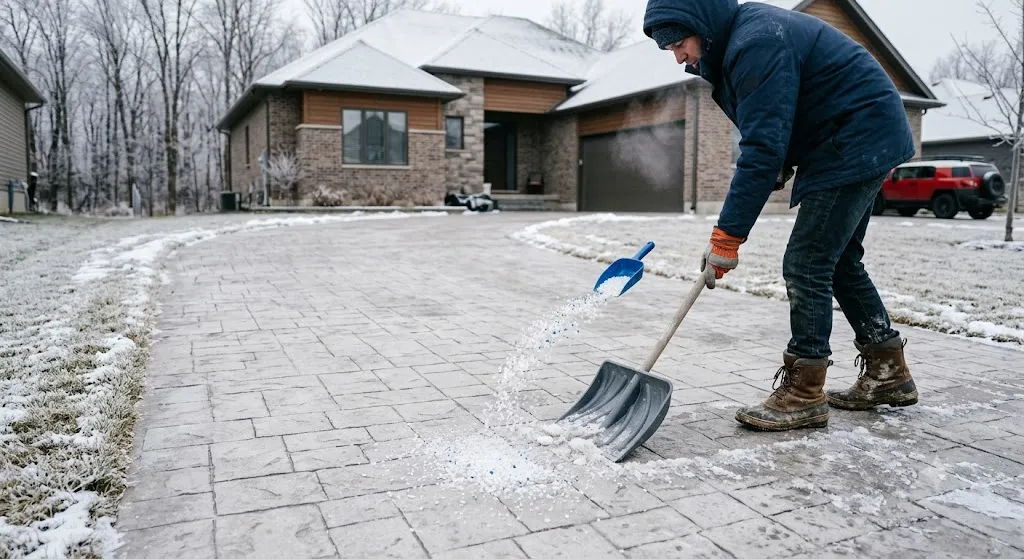
Winters in the Lehigh Valley don’t just test your patience; they test every surface around your home, which is why understanding the nuances of the best driveway materials for cold climates really matters. When temperatures swing above and below freezing, the materials that perform best are the ones that can handle constant freeze‑thaw cycles, snow removal, and de‑icing without breaking down before their time.
In this comprehensive guide, we’ll dive into how winter really affects driveway materials, which options handle the cold best, and how thoughtful design and installation decisions set you up for a driveway that performs year after year when the weather turns harsh.
How Cold Weather Damages Driveways
Before choosing driveway materials for cold climates, it helps to understand how winter actually destroys pavement.
Cold climates create a few consistent problems:
- Water gets into small surface cracks and pores.
- That water freezes, expands, and forces the material apart.
- Thawing loosens the surface, leading to more cracking, raveling, and potholes.
- Snow removal equipment and de‑icing products add extra stress.
Even a driveway that looks fine at the start of winter may have tiny weaknesses under the surface. Once water finds its way in and freeze‑thaw cycles begin, those weaknesses spread faster than they would under mild conditions. That is why driveways in cold regions need both the right material and the right installation practices, including a strong base and good drainage.
Contractors who work with these conditions regularly learn to spot early signs of winter damage and decide whether repair, resurfacing, or full replacement makes sense. That experience matters more and more as a driveway ages and the winters start to leave visible scars.
Asphalt Driveways in Cold Climates
When people ask about the best driveway materials for cold climates, asphalt almost always enters the conversation early. There are good reasons for that.
Why Asphalt Handles Winters Well
Asphalt is naturally flexible compared to materials like concrete. That flexibility helps it absorb the subtle movement that happens when the ground freezes and thaws under the driveway. Instead of cracking immediately, the surface can move slightly and settle back into place.
In cold weather, asphalt offers several practical advantages:
- Dark color helps absorb sunlight, which can speed up melting on clear winter days.
- Smooth surface makes snow removal with shovels or plows straightforward.
- Small cracks and early surface wear can usually be repaired without rebuilding the entire driveway.
When the base beneath the asphalt is built correctly and drainage is handled well, resurfacing with a new asphalt layer can extend the life of the driveway once the top wears down. That middle‑ground option becomes especially important in cold climates, where the surface takes more punishment but the underlying structure may still be strong.
Where Asphalt Struggles in Winter
As durable as asphalt can be, frequent freeze‑thaw cycles eventually leave their mark. Over time, the surface may show:
- Spider‑web or “alligator” cracking.
- Potholes where water sits and freezes.
- Edge breakdown where snowplows or traffic chip away at the sides.
Once these signs spread across the driveway, patching small spots starts to lose its value. At that stage, resurfacing or replacement becomes the better long‑term move. The choice depends on whether the base is still stable or whether winter has already compromised the structure below the surface.
A contractor who regularly compares asphalt repair, resurfacing, and replacement learns quickly how to read these signs in cold‑weather driveways. That evaluation is what keeps a homeowner from investing in a short‑term fix when the real solution needs to go deeper.
Concrete Driveways and Cold Weather
Concrete driveways show up all over the Northeast, but they are not always the top pick when people talk about the best driveway materials for cold climates. The reason comes down to how concrete responds to the same winter stresses that asphalt faces.
The Appeal of Concrete
Concrete offers a clean, bright look and a very solid feel. For some homeowners, that visual style and sense of permanence are part of the appeal. Concrete can be enhanced with decorative finishes, color, or stamping, and when winters are mild, it can remain attractive for many years with proper care.
Cold‑Climate Drawbacks
In regions where freeze‑thaw cycles are common, concrete behaves differently than more flexible materials:
- It forms a solid slab with limited ability to move when temperatures shift.
- Once cracks open, water follows, and freezing expands those cracks further.
- Surface spalling (chipping or flaking) can develop as moisture and de‑icing chemicals take a toll.
Contractors can use air‑entrained concrete mixes, sealers, and careful joint placement to improve performance, but a concrete driveway in a cold climate still faces more risk than one in a milder region. When winter damage does occur, repair options are more limited and often more visible than in asphalt or modular systems.
For homeowners in cold areas who want a driveway that resists cracking and remains easier to maintain over time, asphalt and certain types of pavers usually take the lead over traditional poured concrete.
Paver Driveways in Freeze‑Thaw Conditions
If you ask which materials stand out as the best driveway materials for cold climates, interlocking pavers often rise to the top of the list, especially where winter temperature swings are constant.
Why Pavers Excel in Winter
Paver systems break the driveway into many individual units that lock together on a prepared base. That design changes how the driveway responds to winter:
- Each paver can move slightly as the ground freezes and thaws, relieving stress instead of concentrating it.
- Joints between pavers allow some flexibility while still maintaining a stable surface.
- If a section settles or becomes damaged, individual pavers can be lifted and reset instead of tearing out the whole driveway.
Permeable paver systems take winter performance further by allowing water to drain through the joints rather than sit on the surface. When meltwater can escape instead of pooling and refreezing, the driveway surface stays safer and experiences less freeze‑thaw damage over time.
Practical Benefits for Snow and Ice
In day‑to‑day winter use, pavers offer other advantages:
- Textured surfaces provide good traction in icy conditions.
- Snow removal is straightforward when using rubber‑tipped shovels or plow blades.
- System design can incorporate drainage channels or snow‑melt features if needed.
The same installation skills that keep paver driveways flat and stable in warm weather become even more important when the ground moves under winter frost. A crew that understands aggregate base depth, compaction, and edge restraint can build a paver driveway that weathers cold seasons gracefully.
Gravel and Aggregate Driveways in Cold Regions
Gravel driveways might not be the first answer that comes to mind when someone asks about the best driveway materials for cold climates, but they have a place in the conversation—especially where budget and drainage matter.
Strengths of Gravel in Winter
Gravel behaves differently from solid surfaces:
- Water drains directly through the material, reducing pooling and refreezing on the surface.
- Freeze‑thaw cycles do not create cracks in the same way they do on solid slabs.
- Installation costs are typically lower than asphalt, concrete, or pavers.
For rural properties, long driveways, or areas where heavy snow equipment regularly passes through, gravel can provide a functional surface without the structural cracking that hard surfaces may experience.
Maintenance Tradeoffs
Gravel’s winter strengths come with a few challenges:
- Snow removal tends to push gravel aside, requiring raking and replenishing.
- Surface rutting can develop under repeated traffic.
- Loose stones may scatter into turf or landscaping.
Where homeowners value a finished look, smooth snow removal, and long‑term stability, gravel often becomes a temporary or secondary option rather than the primary choice. In those cases, more structured materials like asphalt or pavers fit better with the long‑term picture for a cold‑climate driveway.
Matching Driveway Material to Winter Conditions
Talking about driveway materials for cold climates always leads to the same basic question: “Which one is right for this property?” The answer depends on more than just the regional weather.
Key considerations include:
- How often freeze‑thaw cycles occur and how extreme they are.
- Whether the driveway sees heavy vehicles, frequent traffic, or just light daily use.
- How quickly snow and ice need to be cleared after storms.
- Whether the existing base and subsoil drain well or trap water.
Asphalt vs. Pavers vs. Concrete in Cold Weather
In many cold regions, asphalt and quality paver systems share the spotlight:
- Asphalt offers a strong balance of flexibility, repair options, and cost.
- Pavers provide standout performance in freeze‑thaw conditions and allow for targeted repairs and water management.
- Concrete offers a clean appearance but needs careful mix design and maintenance to reduce winter damage.
The choice is rarely just about one single feature. Contractors often evaluate the driveway’s current condition, how the property is used, and what kind of long‑term result the owner expects. From there, repair, resurfacing, or replacement decisions fall into place.
Why Installation Quality Matters More in Cold Climates
You can choose one of the best driveway materials for cold climates and still end up with early failure if the installation misses key steps. Cold‑region driveways lean heavily on what happens beneath the surface.
Base and Subgrade
A strong driveway in a cold climate starts with:
- Proper excavation that reaches stable subsoil.
- A well‑graded base that directs water away instead of trapping it.
- Sufficient aggregate depth and thorough compaction.
When these steps are rushed or skipped, water accumulates under the driveway. Freeze‑thaw cycles then move that trapped water and weaken the structure above it. Even the best asphalt or paver system cannot compensate for a base that shifts every winter.
Drainage and Surface Design
Drainage design is the second half of the equation. Good cold‑weather driveway projects:
- Avoid flat areas where meltwater can sit and refreeze.
- Use slopes and channels that direct water away from the driveway.
- Consider permeable options where standing water has been a recurring problem.
Contractors who work regularly in the Lehigh Valley learn to read the local soils, slopes, and water patterns. That local experience helps shape driveways that fit what the property actually faces once the temperature drops.
Repair, Resurfacing, and Replacement in Winter‑Affected Driveways
Cold climates accelerate the moment when a homeowner has to decide: repair, resurface, or replace? The same driveway material that looked fine when it went down may need a different strategy years later.
When Repair Makes Sense
Repair works best when:
- Damage is small and localized (single pothole, limited cracking).
- The rest of the driveway still performs well.
- The goal is to stop a minor problem from becoming a major one.
For asphalt driveways, early repairs can protect the base and slow down the spread of winter‑driven damage. In cold climates, catching issues early drastically improves the odds that a driveway can be revived rather than rebuilt.
When Resurfacing is the Better Option
Resurfacing becomes the smarter choice when:
- Surface wear is widespread, but the base is still strong.
- Cracking, fading, or shallow damage covers large areas.
- The owner wants a fresh surface without a full reconstruction.
A well‑executed asphalt resurfacing project essentially gives the driveway a new top layer while respecting the solid foundation underneath. For winter‑affected driveways, that approach can restore appearance and performance without the time and cost of starting over.
When Replacement is Unavoidable
Replacement is the answer when:
- The base has failed, or water and freeze‑thaw cycles have compromised the structure.
- Deep alligator cracking and repeated potholes indicate deeper problems.
- Drainage issues keep creating new damage.
Cold climates reveal base problems faster, because water finds every weak spot. A thorough inspection from an experienced paving contractor can determine whether repair and resurfacing will hold up or whether a full rebuild is the only reliable path forward.
Choosing Materials for Heavy Vehicles in Cold Climates
Cold weather is one challenge; heavy vehicles add another layer. When a driveway regularly supports trucks, RVs, work vans, or equipment, material choice matters even more.
Structural Considerations
Driveways used by heavy vehicles in winter need:
- A thicker, well‑compacted base to resist rutting and structural flex.
- Pavement layers designed to distribute loads evenly.
- Materials that can handle both traffic and freeze‑thaw without collapsing.
Here, combinations of strong asphalt design and high‑quality paver systems often outperform lighter installations. The same principles used for commercial lots work their way into residential driveways when heavy loads are part of everyday life.
Long‑Term Performance
A driveway built for heavy vehicles in a cold climate cost more up front than a basic installation, but it usually saves money later. When surface distress shows up early, contractors familiar with these structures can often trace the cause back to base depth, compaction, or load requirements that were underestimated during the planning stage.
Working with a paving crew that has spent years building driveways and lots for a range of vehicle types allows homeowners to match materials and design to how the driveway will really be used once winter settles in.
Practical Tips for Homeowners in Cold Regions
Even with one of the best driveway materials for cold climates in place, a few simple habits help keep that surface looking and performing better through winter.
Helpful practices include:
- Clearing snow promptly so meltwater does not refreeze in place.
- Avoiding metal shovels or plow blades that dig directly into the pavement.
- Using de‑icing products that are less aggressive on the surface.
- Watching for early cracks or low spots and addressing them before winter arrives.
Routine inspections and small repairs can delay the need for major work. When questions come up, a conversation with a contractor who routinely compares repair, resurfacing, and replacement options can clarify whether a driveway is simply showing normal wear or signaling deeper concerns.
Questions Our Customers Ask About the Best Driveway Materials for Cold Climates
How do freeze‑thaw cycles affect driveway materials?
Freeze‑thaw cycles push water into small pores and cracks, then expand that water as it freezes, forcing the material apart. Over time, this process creates surface cracking, potholes, and structural weakness, especially in driveways without a properly designed base or drainage system.
Is asphalt or concrete better for cold‑weather driveways?
In many cold regions, asphalt tends to perform better than concrete because it is more flexible and can absorb movement from freeze‑thaw cycles. Concrete can still work with the right mix, joints, and maintenance, but it generally faces higher risk of cracking and surface damage when winters are harsh.
Are paver driveways a good choice for winter performance?
Interlocking paver driveways handle winter conditions very well because the modular design allows each unit to move slightly without creating large cracks. Permeable paver systems also manage meltwater effectively, reducing ice buildup and freeze‑thaw stress when installed on a properly engineered base.
How do I know if my winter‑damaged driveway needs repair or replacement?
If damage is limited to local cracks or a few potholes, repair is usually enough. When wear is widespread but the base remains strong, resurfacing can restore the surface. Deep cracking, repeated potholes, or drainage issues often signal base failure, which typically requires full replacement after a professional evaluation.
What driveway material works best for heavy vehicles in cold climates?
Driveways that carry heavy vehicles in cold climates usually need a stronger base and carefully designed pavement structure. High‑quality asphalt installations and well‑built paver systems often provide the best combination of load‑carrying capacity and freeze‑thaw resistance when tailored to the property’s specific use and conditions.